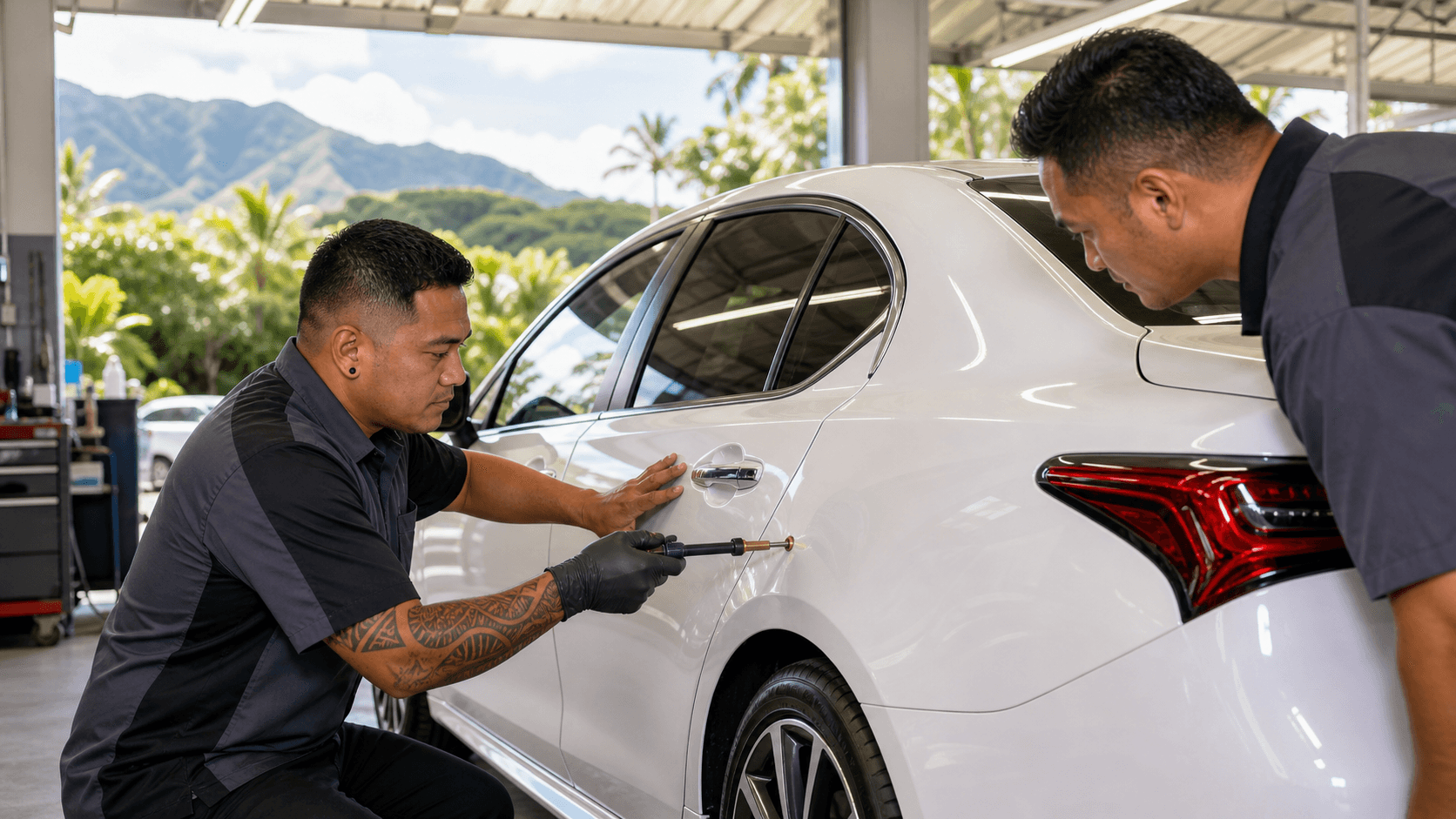
Avoid Costly Mistakes After a Pearl City Collision
Collisions in Pearl City happen fast. One moment you are easing out of a stall at Pearl Highlands, the next there is a scrape on your bumper or a crunch in rush hour traffic along H-1. What you do in the next few hours and days can make a big difference in how safe your vehicle is, how long repairs take, and how much money you keep in your pocket.
Many drivers think, "It looks minor; I will deal with it later." That choice can lead to bigger problems, from hidden frame damage to lost insurance coverage. Drivers on Oʻahu deal with busy roads, crowded parking lots, and constant sun and salt in the air, so small mistakes after a crash can grow quickly.
We work with collision damage every day, especially on Mercedes-Benz and other major brands, so we see the same problems over and over. In this article, we are sharing common collision repair mistakes drivers make in Pearl City, and how to avoid them so you can protect your claim, your warranty, and your safety.
Waiting Too Long to Get Collision Damage Inspected
One of the biggest mistakes is waiting weeks or even months before getting damage checked. A scrape or small dent might not look serious, but there is often more going on underneath the paint.
When repairs are delayed, hidden issues can get worse, especially with our mix of sun, rain, and salty air. That can mean:
- Rust starting on exposed metal
- Misaligned panels slowly rubbing and wearing
- Frames or unibodies slightly bent from the impact
- Suspension or alignment off, causing your tires to wear faster
Waiting can also cause problems with insurance. Many policies have time limits and require clear proof that the damage came from a specific accident. If you put things off, you may run into:
- Questions about when the damage happened
- Requests for extra photos or inspections
- More pushback on what will be covered
Modern vehicles rely on sensors, crumple zones, and airbag timing that all work together. A small hit that changes how your bumper or structure absorbs energy can affect how those systems respond in a second crash. You might not notice anything is wrong until the moment you really need them.
A simple post-accident checklist for Pearl City drivers looks like this:
- Take clear photos of all vehicles and the scene
- Exchange information and report the accident if needed
- Let your insurance company know as soon as you can
- Arrange a professional inspection quickly, even if damage looks minor
The sooner a trained team looks at your vehicle, the easier it is to catch hidden issues and keep your claim clean and simple.
Choosing a Body Shop on Price Alone
Another common mistake is picking the lowest estimate without asking what you are actually getting. Not all repair plans are the same, even if the final number looks better at first glance.
When you compare estimates, look beyond the total. Ask questions about:
- What kind of parts will be used
- How the paint will be matched and blended
- Whether structural checks are included
- What kind of warranty is offered on the repair
There is also a big difference between original equipment manufacturer (OEM) parts and aftermarket or salvage parts. OEM parts are built to match your vehicle as it was designed. With brands like Mercedes-Benz and other modern vehicles, part design and fit affect:
- How the vehicle performs in a crash
- How panels line up and seal against moisture
- Whether sensors and cameras sit in the correct position
Very low quotes can be a warning sign. They might mean:
- No complete frame or structural measurements
- Shortcuts in paint prep that show later as peeling or fading
- Skipping safety system checks or recalibration
For modern vehicles, especially with complex body structures, it is important to choose a shop that follows manufacturer repair methods and has the right tools for the job, not just the lowest opening number.
Overlooking Frame and Structural Repair Needs
Even a low-speed bump in Pearl City traffic or in a tight parking structure can move more than the surface panels. Unibody structures are designed to absorb energy, and that can mean bends or twists you cannot see just by looking.
If that structure is not brought back to within factory specs, you might notice:
- The vehicle pulling to one side while driving
- Steering that feels "off" or loose
- Rattles, squeaks, or uneven gaps around doors and hoods
- Tires wearing out faster on one side
Professional collision repair shops use computerized measuring systems to compare your vehicle's structure to the dimensions it had when it left the factory. This tells technicians where the metal has moved and by how much, so they can bring it back into the correct range rather than just "eyeballing" it.
When you are choosing a shop, it helps to ask directly about frame and structural repair:
- Do they have computerized measuring equipment?
- Can they provide printouts or digital reports that show measurements?
- How are technicians trained on structural repairs?
Getting clear answers and documentation gives you confidence that the vehicle will drive, steer, and protect you the way it should.
Ignoring Safety Systems and Technology After a Crash
Modern vehicles on Oʻahu roads are full of technology that helps avoid crashes and protect people when something goes wrong. Many models have:
- Collision warning or automatic emergency braking
- Lane-keeping assistance
- Adaptive cruise control
- Blind-spot monitoring
- Parking and distance sensors
These systems depend on cameras, radar, and sensors mounted in bumpers, windshields, grilles, mirrors, and other parts of the body. Even a small parking lot bump can knock those sensors out of alignment or damage their mounting points.
Any repairs that touch these areas often require diagnostics and recalibration. If this step is skipped, you might get:
- False alerts that cause distraction
- Systems that shut off unexpectedly
- Features that seem to work, but are actually pointing in the wrong direction
Not every shop has the tools or training to work with these systems correctly, especially on brands like Mercedes-Benz that use specific software and repair steps. When planning collision repairs in Pearl City, it is smart to ask how safety systems will be handled and what kind of documentation you will get for recalibration and testing.
Letting Insurance Dictate Every Repair Decision
Many drivers think they must go to the shop their insurance company suggests. In Hawaii, you have the right to choose the repair facility you trust, as long as it meets your needs for safety and quality.
Insurance estimates often focus on keeping costs as low as possible. That can sometimes lead to pressure for:
- Cheaper aftermarket or salvage parts
- Shorter repair times that leave less room for full inspections
- Skipping certain procedures that are not obvious to the eye
A high-quality collision repair shop acts as your partner in this process. The shop can:
- Review the estimate and explain it line by line
- Communicate with the insurance adjuster about needed steps
- Help show why certain parts or procedures are important for safety
Before anything happens, take time to know what your policy covers and what your deductible is. When a collision happens, compare estimates and ask questions until you feel comfortable that your vehicle will be repaired as close as possible to its pre-accident condition.
By avoiding these common mistakes, drivers in Pearl City and across Oʻahu can keep their vehicles safer, hold onto more value, and feel better every time they get back on the road after a collision. Classic Bodyworks Hawaii is here in Pearl City to help with everything from cosmetic bodywork to structural frame repair and collision repair on Mercedes-Benz and other major vehicle brands, so your vehicle is cared for with precision, care, and integrity.
Restore Your Vehicle's Safety and Appearance With Expert Care
When your car has been in an accident, you deserve precise repairs that bring it back to pre-collision condition. At Classic Bodyworks Hawaii, our technicians use quality materials and careful workmanship to provide trusted collision repair in Pearl City. We take the time to explain your options, coordinate with insurance, and keep you informed throughout the process. Ready to get your estimate or schedule an appointment? Simply contact us and we will help you get back on the road with confidence.