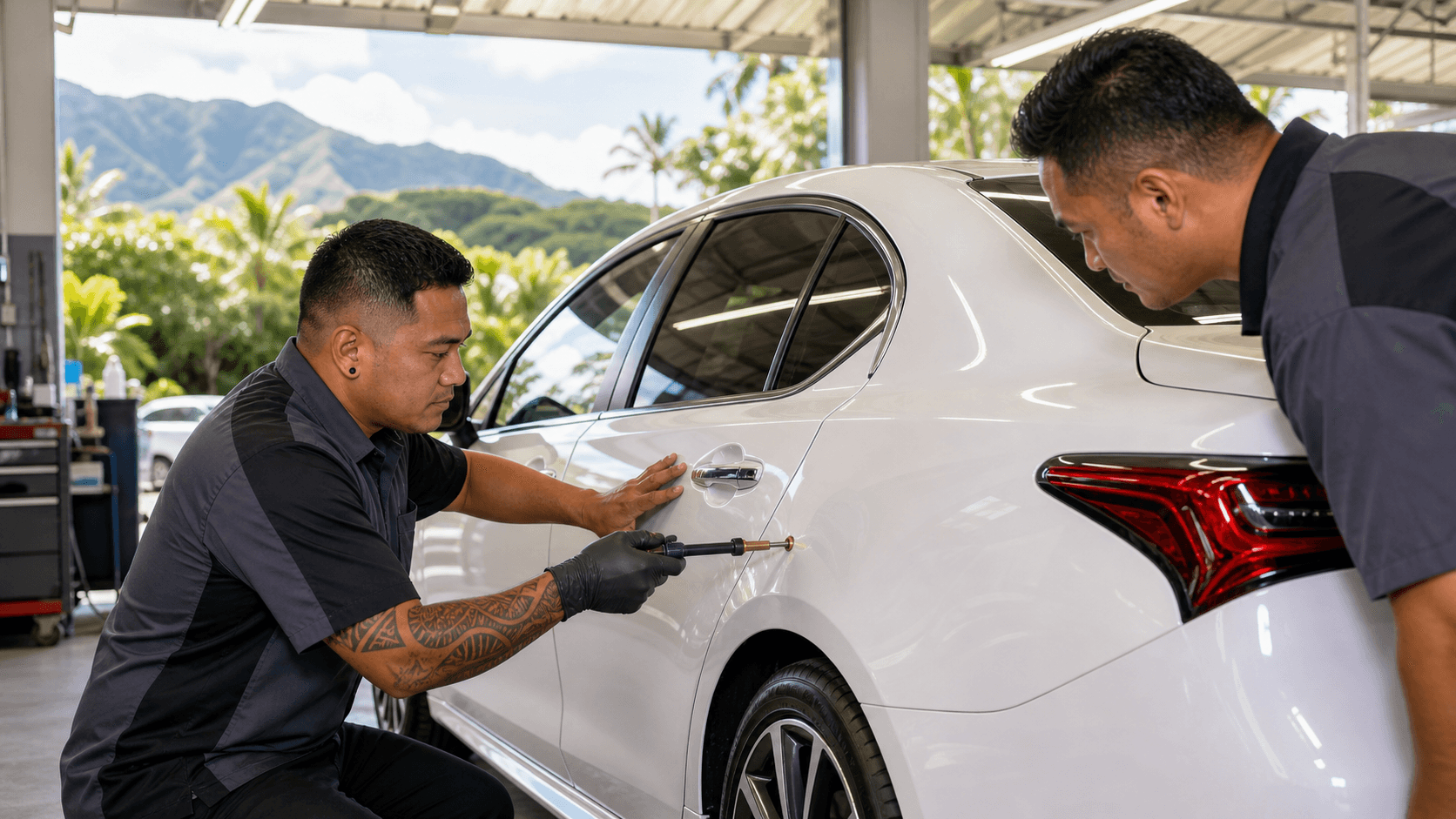
A collision can leave you with a long list of questions, even when the damage looks minor. Preparing your vehicle before repair work begins can lower stress, help us understand what happened, and keep the process moving in the right direction.
At Classic Bodyworks Hawaii, we help drivers from across Oahu prepare for collision, cosmetic, structural, paint, and manufacturer-specific repairs in Pearl City. A few organized steps before you leave your vehicle with us can make a real difference.
Start Repairs with Clear Next Steps
Safety comes first after any crash. If you notice leaking fluids, deployed airbags, steering trouble, damaged wheels, loose parts, or visible structural damage, do not drive the vehicle. Call emergency services when needed, and arrange a tow rather than risking more damage on the road.
Even a vehicle that seems drivable may have problems hidden behind the bumper, beneath a panel, or inside a safety system. We recommend being cautious, especially if the vehicle pulls to one side, makes new noises, or shows warning lights after the impact.
Vehicle collision repair in Oahu often involves more than an initial estimate. Once your vehicle arrives, the repair process may include inspection, insurance communication, disassembly to look for hidden damage, repair authorization, parts ordering, structural or cosmetic repairs, paint refinishing, quality checks, and delivery.
Repair timing can change as work progresses. Hidden damage, parts availability, and the needs of your vehicle's specific systems may affect the plan. We keep repair communication focused on what we find and what needs to happen next.
November also brings holiday travel and changing road conditions around Oahu. Rain, wet pavement, lower visibility, and storm-related hazards can all make driving more difficult. Promptly documenting damage and arranging a professional inspection can help protect your vehicle from more exposure while you wait for repairs.
Document Damage Before Weather Changes
Clear photos and notes give us a better starting point when we inspect your vehicle. Take photos only after you have moved to a safe location and can do so without putting yourself or others at risk.
Try to capture both the big picture and the smaller details. Wide shots show the full vehicle and its position after the accident, while close-up photos can show cracks, dents, broken parts, and paint damage.
Helpful photos may include:
- Every side of the vehicle, even areas that appear undamaged
- Damaged panels, lights, wheels, tires, glass, and interior surfaces
- Deployed airbags, fluid leaks, or loose pieces
- The accident scene, road conditions, signs, and other vehicles when safe
While the event is still fresh in your mind, write down details that may be helpful later. Keep the date, time, location, weather, other driver information, witness contacts, police report details, and insurance claim number in one place.
It also helps to note anything that feels different when the vehicle is operating. Tell us about warning lights, unusual sounds, vibration, handling issues, camera problems, or features that no longer work as expected. Those details can guide a closer inspection.
Rain and humidity can create extra concerns when collision damage leaves metal, lights, seals, or body panels exposed. Moisture may get into cracked lights or damaged seams, and exposed areas can worsen over time. If possible, keep the vehicle protected from additional weather exposure, but avoid makeshift fixes that could hide damage or interfere with a proper assessment.
Organize Details for Vehicle Collision Repair in Oahu
A good repair plan considers far more than a dent or scratched paint. Before bringing your vehicle in, gather the documents and information that help us understand the vehicle, the accident, and any insurance communication already underway.
Keep these items available for your appointment or estimate:
- Driver license, vehicle registration, and insurance card
- Claim number and adjuster contact information, if you have them
- Police report information and lienholder details, when applicable
- Your preferred phone number, email, and communication preferences
- Owner authorization if someone else will make repair decisions
Vehicle-specific details matter, too. Share the year, make, model, vehicle identification number, mileage, existing damage, recent repairs, and any aftermarket accessories. Let us know whether the vehicle has cameras, parking sensors, driver-assistance features, or other electronic systems that may need inspection after an impact.
For vehicle collision repair in Oahu, it is always reasonable to ask how hidden damage is handled, whether a supplemental estimate may be needed, and how updates will be shared. You can also ask what repair stages are expected and how manufacturer-specific procedures are considered.
Mercedes-Benz owners, along with owners of other advanced vehicles, should discuss the needs of their particular model. Structural materials, electronics, sensors, safety equipment, and finish requirements may all affect the repair plan. We want to understand the full scope of the vehicle before repair work moves forward.
Prepare Your Car for Safe, Accurate Repairs
Before dropping off your vehicle, remove personal belongings whenever possible. This protects your property and gives our technicians clear access to the areas that may need attention.
Take out valuables, loose items, work equipment, personal documents, garage remotes, toll passes, and child seats if they can be removed safely. Keep your identification and insurance paperwork with you rather than leaving them in the car. If severe damage prevents you from removing an item, let us know so we can make a note of it.
Beyond the visible impact area, tell us about any changes you have noticed. A damaged bumper may also be connected to a backup camera issue. A side impact could affect a door's fit, cause water leaks, or create a new vibration while driving.
Details worth mentioning include pulling, uneven tire wear, warning lights, trunk or door fit problems, unusual sounds, water leaks, camera concerns, and changes to driver-assistance features. No concern is too small to share. What seems unrelated may help us identify damage that is not obvious during a walkaround.
Avoid trying to repair the vehicle at home before the professional assessment. Tape, temporary paint products, unapproved replacement parts, and attempts to force panels back into place can make it harder to see the full damage. Our inspection process is designed to look at cosmetic concerns, structural components, paint needs, and safety-related systems with the right repair approach in mind.
Move Forward with Confidence
When you need collision repair after an accident, a timely estimate and honest discussion about your vehicle's needs can bring clarity to an uncertain situation. We provide repair consultations in Pearl City for drivers who need help understanding cosmetic damage, structural concerns, refinishing needs, and manufacturer-specific repair planning.
As holiday travel picks up and wet-weather driving remains possible, do not put off an inspection after a collision. Protect the vehicle from further exposure, keep your accident details organized, and share every concern you have noticed so the repair plan can address both what you see and what may be behind it.
Restore Confidence In Your Next Repair Step
At Classic Bodyworks Hawaii, we help make the repair process clear from the first estimate through final delivery. Learn about vehicle collision repair in Oahu and what our team can do to restore your vehicle with careful attention to its condition. When you are ready to discuss your repair needs, contact us to schedule an assessment.