Why Mercedes Collision Repair in Hawaii Truly Stands Apart
Mercedes drivers in Hawaii hear a lot of mixed messages after a crash. Some people say any body shop is fine if the price is low enough. Others warn that your car will never be the same unless it goes to a Mercedes certified shop. For island drivers, the truth sits somewhere in the middle, but there is one big difference, Hawaii is not the mainland.
Our roads, climate, and even our shipping routes change how collision repair works here. Salt in the air, strong sun, and longer parts wait times all affect how your Mercedes looks, drives, and holds value after an accident. We want to walk through what makes Mercedes collision repair in Hawaii different and why it matters for your safety, your time, and your long term ownership plans.
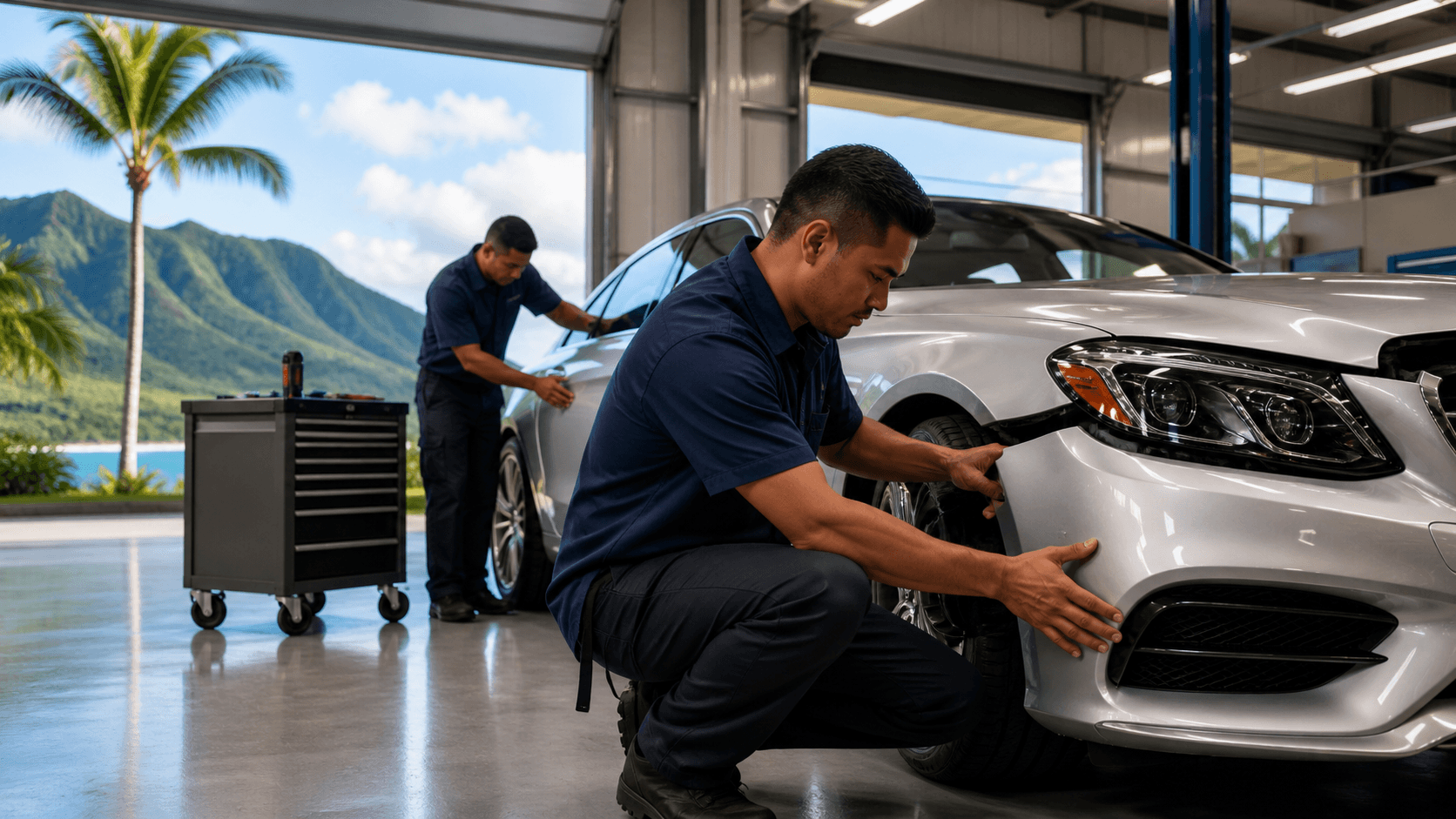
As a Mercedes-Benz Elite Certified and multi-OEM certified collision center in Pearl City, we work on these differences every day. We see how tropical weather blends with heavy island traffic and new Mercedes technology to create repair challenges you might not expect. When you understand these details, it is easier to choose a shop and feel confident about the work on your car.
Island Climate Vs Mainland Roads
Hawaii is beautiful, but it is not easy on metal. Year round humidity and salty ocean air can start corrosion in places you would never see until it becomes a serious problem. Compared to many mainland areas, that process can move faster here, especially if the repair work did not protect the bare metal correctly in the first place.
That is why proper prep work is so important on island cars. After a collision, panels get sanded, straightened, or replaced. Any exposed areas need the right sealers, primers, and coatings so rust does not start under the paint. If that step is rushed or skipped, the damage can show up months later as bubbles, peeling paint, or weak spots along seams.
Our local driving patterns add another layer:
- Stop and go traffic on main routes creates more low speed fender benders
- Tight parking in town leads to bumper and door damage
- Wet roads during showers mean more rear end collisions
- Short trips close to the coast keep your car in salty air most of the day
Because of this mix, Mercedes collision repair in Hawaii has to pay extra attention to:
- Rust prevention around seams, welds, and panel edges
- Underbody protection in areas that see road spray
- Paint systems that can handle bright sun and coastal exposure
A good looking repair on day one is not enough here. The work has to stand up to salt, rain, and UV day after day.
Parts, Shipping, and Timing the Island Logistics Factor
On the mainland, many shops can get factory parts in a day or two. Hawaii runs on a different schedule. Original Mercedes parts often need to be shipped in, which means longer wait times that can stretch even more around holidays and busy travel seasons.
This changes how repair planning works. Instead of tearing your car apart right away and then waiting with it stuck in pieces, an experienced island shop will:
- Confirm which OEM parts are needed
- Order them as early as possible
- Watch shipping ETAs and adjust workflow
- Time disassembly to match parts arrival
That way, your Mercedes spends less time sitting in the shop and more time either on the road or safely at home while parts are on the way. Coordinating with insurance during this process also matters. Clear communication about parts lead times, repair stages, and supplement approvals can prevent unnecessary back and forth that only slows things down.
When you combine island shipping with modern Mercedes designs, planning becomes even more important. Many repairs involve special fasteners, clips, and brackets that are specific to your model. Making sure those pieces arrive together keeps the repair moving instead of stalling halfway.
Why Mercedes-Benz Elite Certification Matters More in Hawaii
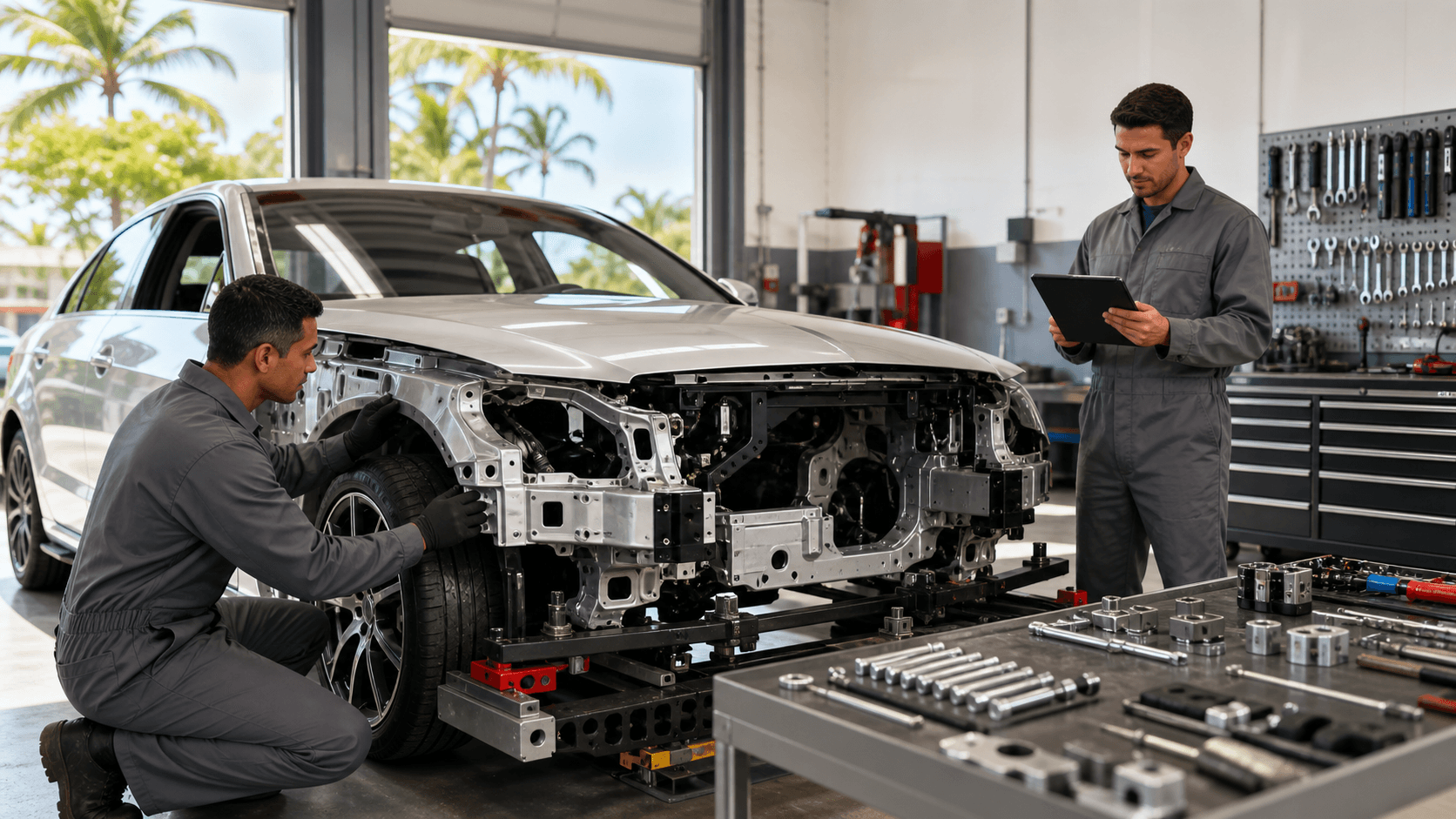
Mercedes vehicles are built with complex materials and systems. There are aluminum panels next to high strength steel, and all of it is tied into advanced safety structures. On top of that sit driver assist features, sensors, cameras, and radar units that need exact placement and calibration after a crash.
A Mercedes-Benz Elite Certified collision center is trained and equipped to work with:
- Factory repair procedures and current repair data
- Structural and frame measuring systems that match Mercedes specs
- Approved welders, bonding tools, and straightening equipment
- Model specific methods for sectioning and replacing parts
On the mainland, you might have many certified options to choose from. On an island, your list is shorter. That makes your decision carry more weight. A non certified shop might offer what sounds like a simple fix, but if frame points are off, welds are wrong, or sensors are not set up right, the impact can follow you for a long time.
We see the results of quick, generic repairs in:
- Uneven gaps between panels
- Warning lights that come and go
- Wind noise or water leaks
- Steering or braking that does not feel quite right
In a place where you often drive the same busy routes every day, small errors like that can affect both comfort and safety.
Insurance, Safety, and Resale Value ON an Island Market
After a crash, many drivers feel pressure. Insurance adjusters may suggest a shop, friends may push for the fastest or cheapest option, and you just want your car back. It helps to know that you still have the right to choose a certified facility that follows Mercedes repair standards.
On an island with a smaller luxury vehicle market, condition and history carry a lot of weight. Buyers and dealers usually look closely at:
- How well collision repairs line up with factory standards
- Whether panels, gaps, and paint match across the car
- Any signs of rust, overspray, or uneven finish
- Operation of safety and driver assist systems
Quality Mercedes collision repair in Hawaii does more than make the car look good again. It helps protect your trade in or resale value in a market where each clean example stands out.
Safety is just as important. Proper frame measurement, correct material use, and accurate sensor calibration matter every single day, especially during busy fall and winter holiday travel when the roads feel extra crowded. When your car has been repaired to Mercedes guidelines, you can trust that its protection systems are designed to respond the way they were built to.
How Classic Bodyworks Hawaii Protects Your Mercedes and Your Time
All these differences between Hawaii and the mainland climate, logistics, technology, and available expertise shape how we work at Classic Bodyworks Hawaii in Pearl City. Our goal is to bring factory level structural and cosmetic repair to local drivers, while also respecting the realities of island life.
When your Mercedes comes in after a collision, you can expect:
- A thorough assessment of visible and hidden damage
- Clear explanations of what needs to be repaired or replaced
- Honest updates about parts ordering and expected timelines
- Coordination with insurers so the process is as smooth as possible
Throughout the repair, we focus on clean structural work, accurate frame and body measurements, and finishes that hold up to Hawaii's sun, salt, and humidity. We keep the island context in mind, from planning around shipping schedules to helping you prepare before the year end holiday travel rush and heavier traffic on Oahu.
Mercedes collision repair in Hawaii really is different from the mainland. When you understand why, it becomes easier to choose care that protects your vehicle, your time, and your peace of mind every time you get back behind the wheel.
Restore Your Mercedes With Trusted Local Collision Experts
When you are ready to bring your vehicle back to its pre-accident condition, our certified team is here to help with precise repairs and clear communication at every step. Learn how our specialized Mercedes collision repair in Hawaii can protect your investment and keep your car performing the way it should. Reach out today through our contact page so Classic Bodyworks Hawaii can schedule an estimate and get you safely back on the road.