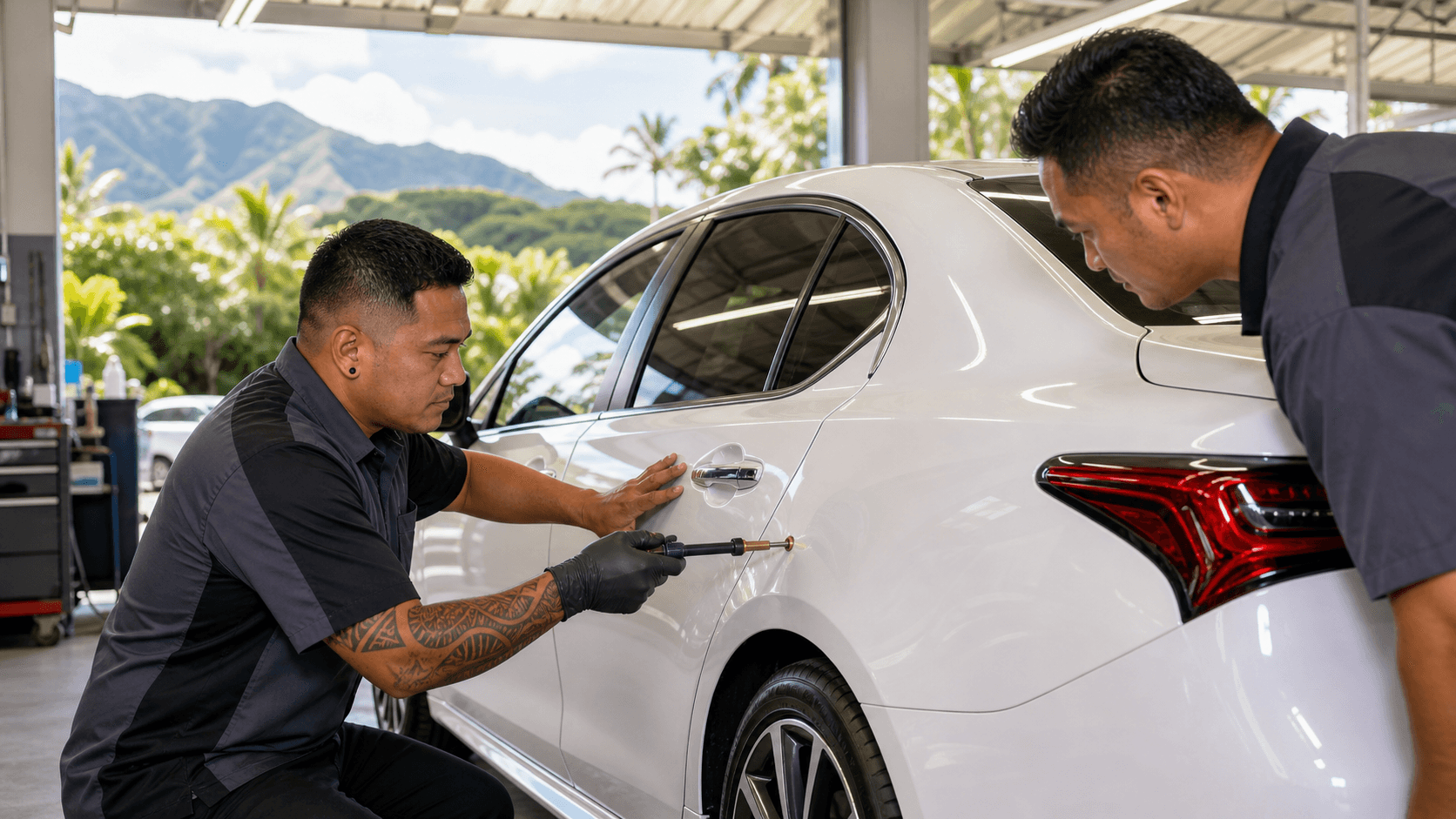
Why Certified Collision Repair Matters for Hawaii Drivers
Certified collision repair in Hawaii is about more than fixing dents and repainting panels. It is about making sure your vehicle is safe to drive, holds its value, and stands up to island conditions after an accident. When you drive on Oahu, you deal with salt air, tight parking in town, fast traffic on H-1 and H-3, and everything in between, so quality repair work matters every single day you get behind the wheel.
When a collision happens, even at low speed, the damage can go deeper than what you see on the surface. Structural points can be stressed, safety systems can be affected, and modern sensors can be knocked out of alignment. Certified collision repair gives you a clear path back to safety and reliability instead of a quick cosmetic fix that might not hold up. At Classic Bodyworks Hawaii in Pearl City, we focus on certified repair standards, including Mercedes-Benz Elite Certified repairs, to help protect your vehicle, your investment, and everyone who rides with you.
What Certified Collision Repair Really Means
Certified collision repair means a manufacturer has reviewed a shop's training, equipment, and repair methods, and approved that shop to perform repairs that meet specific standards. Technicians receive brand-approved training, use tools and equipment suited to modern materials, and follow documented repair procedures that match the way your vehicle was built at the factory. The goal is to restore your vehicle as closely as possible to its pre-accident condition, not just make it look good from a distance.
A non-certified shop may still care about doing a good job, but it might not have direct access to the same repair procedures, specialized tools, or approved parts. That can lead to shortcuts, guessing, or generic repair methods that do not line up with what your vehicle manufacturer recommends. Certified shops are expected to follow original equipment manufacturer (OEM) guidelines, which means:
- Using repair procedures that match factory specifications
- Choosing genuine or OEM-approved parts where required
- Performing structural work that respects factory welds and materials
- Completing refinishing steps designed to last, not fade quickly
By following OEM repair procedures, certified shops help maintain the performance and crashworthiness your vehicle was designed to deliver. This can also support your warranty coverage, since many manufacturers want repairs done to their standards when safety systems, body structure, or refinishing are involved.
The Hawaii Factor: Salt, Sun, and Island Driving
Hawaii's environment is beautiful to enjoy, but tough on vehicles. Salt in the air and on the roads can speed up rust and corrosion, especially in areas where paint has been disturbed by an impact. If collision damage is not repaired correctly, moisture and salt can creep into seams, exposed metal, or behind trim pieces and slowly weaken key areas of the body and frame.
Proper structural repair and refinishing are especially important on Oahu. Quality work includes fully treating bare metal, sealing seams, and applying coatings in the correct order so the repaired area is as protected as the rest of the vehicle, not left more vulnerable. Poorly prepared surfaces or skipped steps can show up months later as bubbling paint or visible rust, which affects your vehicle's appearance and its long-term value.
The strong sun and high UV exposure in Hawaii present another challenge. Paint that looks close in the shade can look noticeably off in bright daylight if color matching or clear coat quality is not precise. Heat and humidity also test the durability of clear coats and finishes. Certified collision repair takes all of that into account with controlled refinishing processes, quality materials, and curing procedures that are designed to stand up to island conditions instead of fading or peeling early.
Inside a Mercedes-Benz Elite Certified Repair Shop
Mercedes-Benz Elite Certification represents a high level of approval from the manufacturer. To earn and maintain this certification, a shop must meet standards for advanced factory training, specialized tools, equipment, and ongoing quality checks. That means technicians are trained to work with the specific construction, materials, and safety systems used in modern Mercedes-Benz vehicles.
Current vehicles often combine high-strength steel, aluminum, and other materials in one body structure. They rely on advanced driver assistance systems (ADAS), sensors, and electronics that tie into bumpers, fenders, windshields, and even trim. After a collision, it is not enough to straighten metal and repaint. The shop must also consider how to recalibrate sensors, verify structural alignment, and confirm that all vehicle systems are functioning as they should.
At Classic Bodyworks Hawaii, we are a Mercedes-Benz Elite Certified collision repair facility, and that certification shapes how we approach repairs. While our Elite status is focused on Mercedes-Benz vehicles, we also provide comprehensive structural, frame, cosmetic, and refinishing services for many other makes. Our goal is consistent: follow manufacturer-focused practices, pay attention to the details that affect safety and performance, and deliver repairs that fit the way you actually drive on Oahu's streets and highways.
How to Choose the Right Collision Shop on Oahu
When you are choosing a collision shop, it helps to know which questions to ask before you trust them with your vehicle. A simple checklist can make the process clearer, especially if you are dealing with the stress that comes right after an accident. Helpful questions include:
- What manufacturer certifications do you hold, and are you Mercedes-Benz certified?
- Do your technicians receive ongoing training on newer models and materials?
- Do you follow OEM repair procedures and use OEM parts when required?
- Will you provide a written estimate and explain your repair plan?
- Do you offer a warranty on your workmanship?
There are also some red flags worth watching for. Be cautious of shops that only offer vague estimates, are reluctant to explain whether they use OEM or aftermarket parts, or avoid describing their repair process. A lack of clear warranty on workmanship or unwillingness to talk about training and certifications can also be a sign to keep looking.
Working with your insurance company is another big part of the process. Many policies allow you to choose the repair shop, even if your insurer has a preferred list. It helps to review your policy, ask your adjuster direct questions about OEM parts and certified repair options, and make sure the repair plan lines up with manufacturer guidelines. Choosing certified collision repair in Hawaii is a way to protect your safety and your vehicle's value, while still coordinating with your insurance coverage.
From Crash to Comeback: Your Next Steps After an Accident
The moments after a collision can feel overwhelming, but a simple roadmap can help you stay organized. Start with safety and documentation, make sure everyone is okay, then gather photos and information about the scene and the vehicles involved. As soon as practical, contact your insurance company, share what happened, and open a claim so the repair process can begin.
Next, decide where the vehicle will go for inspection and repair. If your vehicle is not safe to drive, request towing to a certified collision repair shop instead of the nearest random lot. Once your vehicle is at the shop, review the written estimate and repair plan, including parts choices, structural work, refinishing steps, and any calibration or alignment of sensors and systems. Planning ahead by knowing a certified shop like Classic Bodyworks Hawaii before you ever need one can make this entire process smoother, so when something unexpected happens on the road, you already know who you trust to bring your vehicle back.
Restore Your Vehicle's Safety and Value With Expert Care
If your vehicle has been in an accident, we are ready to help you get back on the road safely with our certified collision repair in Hawaii. At Classic Bodyworks Hawaii, our team follows strict repair standards to protect your vehicle's performance, safety, and appearance. Reach out today to discuss the damage, request an estimate, or schedule service through our contact page.