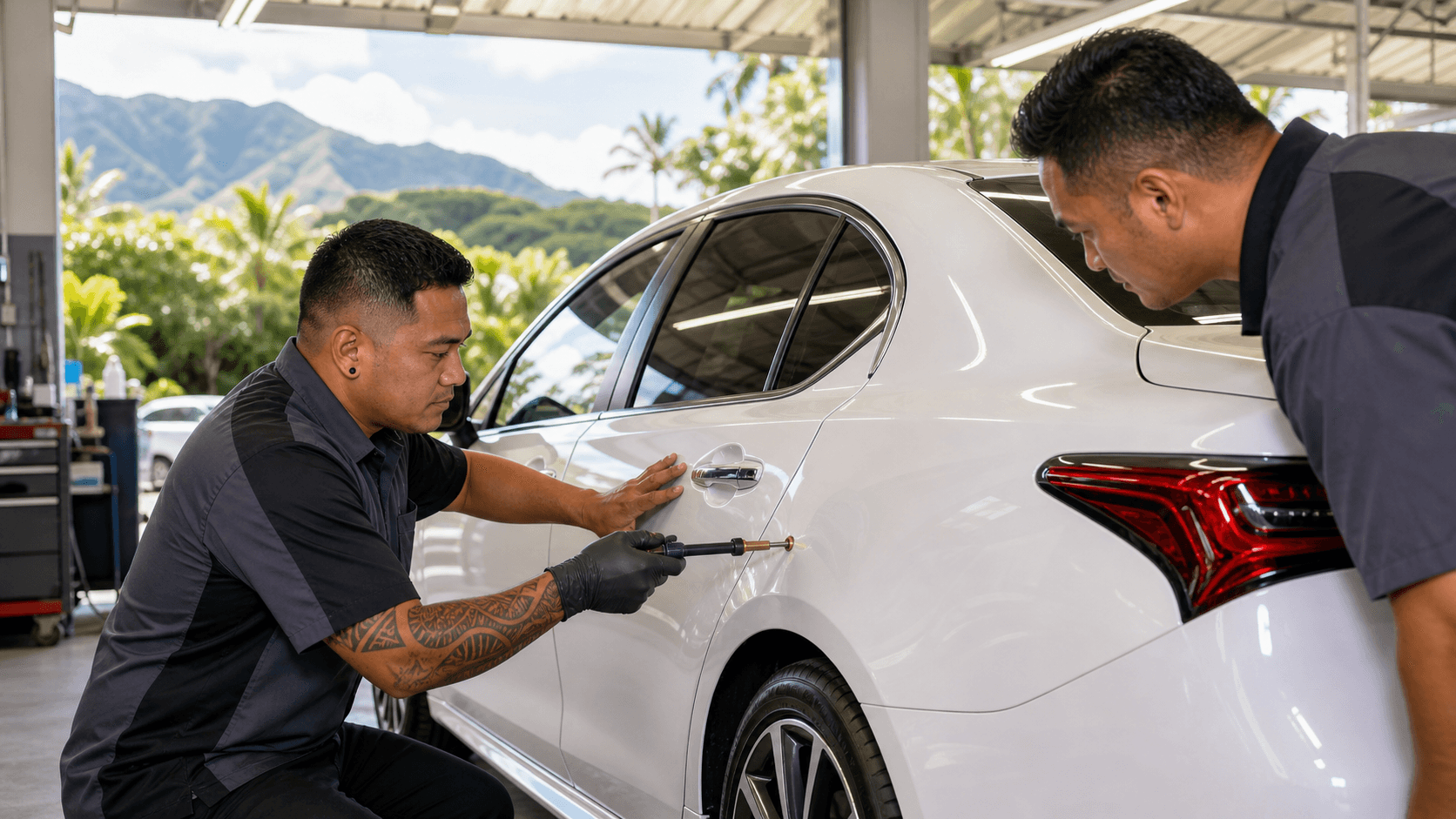
Don't Risk Your Safety: Know Who's Fixing Your Car
Choosing a body shop after a crash is about more than getting your car to look good again. It is about making sure your vehicle can protect you and your passengers the next time something happens on the road. That is where OEM certifications come in, especially for anyone driving around Oahu every day.
You might be coming off a summer fender-bender on H-1 or a scrape in a busy Ala Moana parking lot. Your insurance list shows a bunch of repair options, and they all claim they are great with your car brand. Before you hand over your keys, it helps to know which shops are truly trained and approved by your vehicle's maker, and which ones are just talking a good story.
We want to walk through how to check a shop's OEM certifications, what to ask face to face, and what warning signs to watch for. That way you are not leaving your safety, your ohana, or your investment in the wrong hands.
What OEM Certification Really Means for Your Car
OEM stands for Original Equipment Manufacturer, which is simply the company that built your car. An OEM-certified collision repair shop is one that your automaker has checked, trained, and approved to repair its vehicles to factory standards.
This is very different from a regular state license or being on an insurance company's "preferred" list. Those can say a shop is allowed to operate or is easy for an insurer to work with, but they do not always tell you anything about brand-specific training or repair methods.
An OEM-certified shop typically has:
- Access to official factory repair procedures and updates
- Special tools, welding gear, and equipment for that brand
- Training for structural repairs involving aluminum, steel, and newer materials
- Guidance for airbags, sensors, and advanced driver-assistance systems
That matters even more in Hawaii. With salty air, humidity, and coastal driving, there is more risk of rust and corrosion over time. Many drivers also keep their cars longer, so poor repairs can quietly get worse year after year. Using the right OEM materials and following factory steps helps protect:
- Structural strength in another crash
- Airbag timing and deployment
- Radar, cameras, and lane or brake assist features
- Long-term paint and panel durability in sun and moisture
Must-Ask Questions Before You Leave Your Vehicle
When you are standing at the counter, a few clear questions can tell you a lot about how serious a shop is about OEM repair.
First, ask: "Which OEMs have certified your collision center?" Do not settle for "we work on everything." You want to hear specific brand names, like:
- Toyota, Lexus
- Honda, Acura
- Nissan, Infiniti
- Subaru, and others
If your car is a hybrid or EV, ask if the certification covers that type of vehicle, since those can have unique battery and structural needs.
Next, ask: "How can I verify your OEM certifications?" A confident shop should be ready to show:
- Current certificates on the wall or at the front desk
- Digital copies of up-to-date certifications
- The exact brand programs they are in, so you can look them up later
When you get home, you can go to your automaker's official site, search for the certified body shop locator, and confirm the shop is listed in Hawaii for your brand.
Another key question is: "Who will actually work on my car?" You want to understand:
- Are OEM-trained technicians handling the job from start to finish?
- Do they do regular continuing education for new models and tech?
- Does the team include I-CAR trained staff or other industry-recognized training?
This matters a lot for newer vehicles with sensitive sensors and electrical systems.
Red Flags That a Shop's Claims May Not Be Legit
Not every shop that talks about OEM work is actually certified. Some warning signs are easy to spot if you listen closely.
Watch out for vague or slippery answers when you ask about certifications. Red flags include:
- "We work on everything" but no brand names
- "The insurance company sends people here" instead of manufacturer approval
- Staff who cannot explain which brands have certified them
If they will not show any documents, or the certificates look very old or list logos that are no longer used, that is also a sign to be careful.
Another red flag is pushback on OEM parts or repair procedures. Be cautious if a shop:
- Says OEM procedures are "overkill" or "not needed here"
- Claims aftermarket or junkyard parts are "just as good" with no safety explanation
- Brushes off the need for scanning or calibrating sensors and cameras
On Oahu, with frequent rain squalls, busy freeways, and night driving on winding roads, you want your braking assist, lane alerts, and airbags working exactly how the factory intended.
Pressure tactics are also a bad sign. Be wary if a shop:
- Pushes you to sign paperwork right away without time to think
- Promises unrealistically fast turnaround despite known parts shipping delays to the islands
- Says they can "waive" or "cover" things that sound too good to be true
A reputable shop is clear about parts sourcing, timelines, and working with your insurer, without big promises that do not match real-world delays.
How to Cross-Check OEM Certification Claims at Home
After your visit, you can do a little homework to confirm what you were told.
Start with your vehicle's brand. Go to the official automaker website and look for words like "collision repair" or "body shop locator." Use your ZIP code on Oahu to search for nearby certified shops and see if the place you visited is listed for your vehicle type.
You can also check industry resources. Some training groups and collision networks keep online directories of shops that meet certain training or equipment standards. These can give you another layer of confidence that the shop stays current with modern repair methods.
Next, review the shop's online presence:
- Look for a page that lists certifications and training
- Check for clear, recent photos of the facility and equipment
- See if any certificates or logos match what you saw in person
Reading reviews can help too, but pay more attention to comments about communication, repair quality, and how the car felt after repairs, not just "it looks nice."
Finally, you can call your local dealership for your vehicle brand and ask which collision centers they regularly work with. You can also talk to your insurer about options. Just remember, an insurance "preferred" body shop is not the same thing as an OEM-certified shop, so always confirm through the automaker listing.
Why Local Experience on Oahu Matters for Safe Repairs
OEM training is important, but local experience counts too. Island driving and weather bring special challenges.
Salt air, strong sun, and sudden showers can speed up paint fade and corrosion, and can affect exposed sensors and wiring after a collision. A shop that works on Oahu vehicles every day will plan for:
- Extra attention to rust-prone areas
- Proper sealers and coatings for humid, coastal environments
- Testing vehicles on local-style routes to listen for wind noise or alignment issues
Working often with Hawaii insurers also helps. Shops that know local claim processes, paperwork, and rental car limits can keep your repair moving smoothly during busy times like late summer or back-to-school traffic. That can mean less stress for you while still following OEM repair steps.
Longevity and community reputation round out the picture. It helps to ask:
- How long has the shop been serving Oahu drivers?
- Do they offer a written warranty on their repairs?
- What do friends, family, or trusted local mechanics say about their work?
You are looking for people who stand behind both structural and cosmetic repairs long after you leave the lot, not just the lowest estimate on paper.
By asking smart questions, checking certifications, and trusting your instincts about red flags, you can choose a certified collision repair in Hawaii that keeps your car, and the people you care about, protected on every drive.
Restore Your Vehicle's Safety And Value With Expert Care
If your car has been in an accident, we are ready to guide you through a smooth, professional repair process from estimate to final inspection. Our technicians provide certified collision repair in Hawaii that prioritizes safety, structural integrity, and a factory-quality finish. Reach out to Classic Bodyworks Hawaii today to discuss your repair needs or schedule an appointment, or use our online form to contact us for prompt assistance.