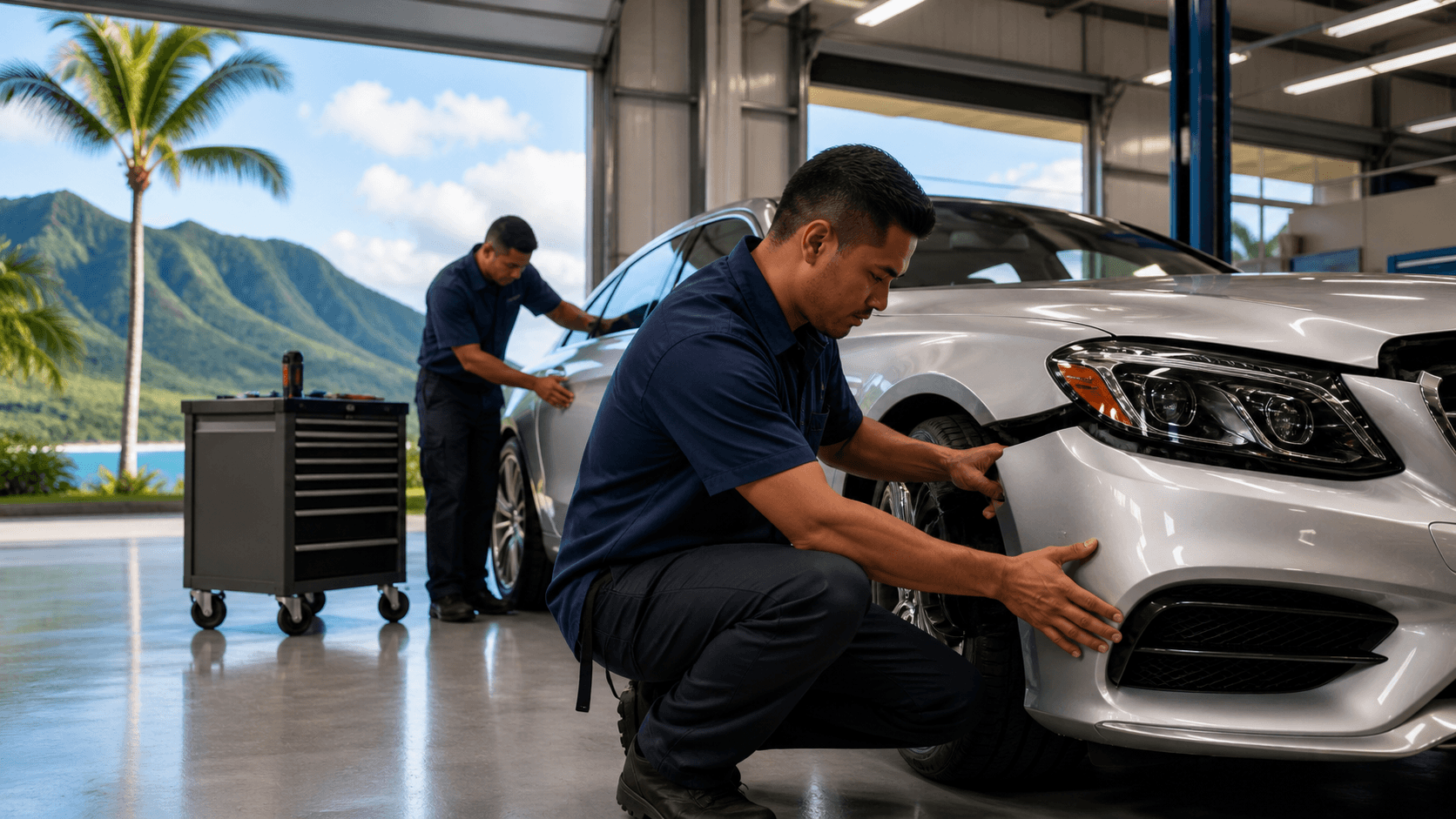
Why Certified Collision Repair Matters More in Hawaii
Certified collision repair means a body shop has been trained and approved by the vehicle manufacturer to repair your car the right way. For brands with advanced technology, like Mercedes-Benz, that means following detailed repair procedures, using approved tools, and matching factory paint and finishes as closely as possible. It is not just about making the car look good again; it is about helping it drive, protect, and perform the way it was designed.
On Oahu, certification matters even more. Newer vehicles have complex electronics, sensors, and advanced driver assistance systems that support braking, lane keeping, and parking. If a repair center does not follow the manufacturer's guidelines, those systems may not work properly, and that can affect safety and warranty protection. At the same time, island-specific challenges like slower shipping, tricky tool calibration, and limited parts choices make it harder to keep repairs on track.
In this article, we want to explain how those island challenges affect your repair experience, and how choosing a certified auto body shop in Hawaii can help protect both your time and your car.
The Island Time Factor in Shipping and Repair Delays
Living in Hawaii has many benefits, but quick delivery from mainland parts warehouses is not one of them. Most certified repairs require original equipment manufacturer parts, special adhesives, and specific refinishing products. Since these often come from distribution centers on the mainland, shipping usually takes longer than it would for a shop located near a large port or warehouse.
Things can get even slower during busy months. Around October and into the holiday season, freight volume goes up, ports get crowded, and schedules tighten. Storm activity over the ocean can also cause vessels or flights to be delayed, and that can hold up key parts like:
- Structural components and reinforcements
- Safety parts such as crash sensors and airbags
- Trim pieces and moldings that complete the repair
- Specialty refinishing products specified by the manufacturer
For certified repairs, we cannot simply swap in a different part or product when something is late. We must wait for what the manufacturer approves. That is why planning ahead is so important for a certified auto body shop in Hawaii. We focus on:
- Ordering parts as soon as the repair plan is approved
- Building realistic repair timelines that account for shipping
- Staying in touch with suppliers about ETAs and backorders
- Communicating clearly with drivers about what to expect
This kind of planning does not erase delays, but it helps keep surprises to a minimum.
The Hidden Challenge of Calibrating Advanced Tools
Modern certified repair is powered by technology. Shops that work on high-end vehicles and newer models rely on tools that must be kept in very good condition. These include frame measuring systems, welders matched to specific metals, paint mixing and matching equipment, and gear for calibrating ADAS cameras and sensors.
Each of these tools needs regular inspection and calibration so readings stay accurate. On the mainland, it might be easy to have a service technician visit frequently or to ship equipment out for service quickly. On an island, things are a bit harder. Challenges can include:
- Fewer local factory-trained tool technicians
- Longer shipping times when equipment must be sent out
- Software updates that require extra coordination with vendors
- Limited backup equipment if a main tool is temporarily out of service
When a tool is even slightly out of calibration, it can affect how well a vehicle is measured, straightened, welded, or painted. For ADAS calibration equipment, accuracy is especially important. If a forward radar or camera is not adjusted correctly after a collision, your safety systems might not warn or react the way the manufacturer intended.
At Classic Bodyworks Hawaii, we work to reduce this risk by closely tracking calibration schedules and recommended service intervals for our equipment. We also stay current with manufacturer repair procedures and software updates, so when we repair and refinish a vehicle, we are working from the latest information available. This helps us keep downtime lower and repair quality consistent.
OEM Parts Availability for Modern Luxury and EV Models
Finding the right parts is another area where Hawaii's location can have a big effect. For popular, older models, some components may be readily available on island. But for newer luxury vehicles and electric vehicles, local stock can be limited. Smaller market volume often means fewer parts kept on hand, especially for rare colors, complex panels, or EV-specific components.
When that happens, it can be tempting to accept non-OEM or generic parts. For modern vehicles, that can bring real risks. Non-OEM parts can affect:
- Structural integrity during a future crash
- Corrosion resistance in Hawaii's salty, humid air
- Panel gaps and fit, which may affect wind noise and water leaks
- Sensor and camera placement that supports ADAS features
With the ocean so close and the air often humid, corrosion is a serious concern. Poor coatings, different metals, or incorrect sealers can lead to rust that spreads faster than drivers expect. That is why certified repair programs generally require OEM parts and materials, or very specific approved alternatives.
To help keep repairs moving, a certified auto body shop in Hawaii will usually:
- Build strong relationships with local dealers and OEM parts distributors
- Pre-order parts once a repair plan is set, especially for complex jobs
- Double-check part numbers and compatibility against factory systems
- Review updated repair bulletins for any superseded or revised parts
This extra effort can reduce reorders and rework so your car spends less time in the shop and more time on the road.
Keeping Your Car Safe Through Busy Travel Seasons
October feels like the start of the holiday stretch. On Oahu, that often means more driving, more visitors, and more traffic around shopping centers, beaches, and popular sights. With crowded lots and busy roads, fender benders and other collisions become more likely.
If you are involved in a collision during these peak months, a calm, simple plan helps. We suggest:
- Make sure everyone is safe and move to a safer area if possible
- Take clear photos of the damage and the surrounding area
- Exchange information as required and contact your insurance
- Let your insurer know you want a certified collision repair shop
- Avoid authorizing major repairs until you understand your options
Telling your insurer you prefer a certified facility matters, especially if you drive a vehicle with advanced driver assistance features. Those systems depend on correct structural repair and careful calibration. When you pick up your car for holiday trips around the island, you want to know that your brakes, cameras, radars, and warning systems are working the way the manufacturer planned.
How to Choose the Right Certified Body Shop on Oahu
With all these island-specific challenges, the shop you choose makes a real difference. A few key things to look for include:
- Clear proof of OEM training or certifications
- Modern frame, measuring, and refinishing equipment
- Access to OEM repair information and procedures
- Written warranties on body and paint work
- Honest estimates and timelines explained in plain language
It can help to visit the shop in person or spend time reviewing their information so you can confirm current certifications, especially if you own a brand with strict repair standards like Mercedes-Benz. Ask how they handle shipping delays, tool calibration, and OEM parts availability. Their answers will tell you a lot about how they approach repair quality.
At Classic Bodyworks Hawaii in Pearl City, we focus on certified auto body work, structural repair, and refinishing for Mercedes-Benz and other major manufacturers, serving drivers across Oahu. We combine OEM-focused training, modern equipment, and local experience with island shipping and service challenges to help keep repairs accurate, safe, and as smooth as possible for our neighbors on the road.
Restore Your Vehicle With Certified Expertise Today
When you trust your repair to Classic Bodyworks Hawaii, you get factory-level precision and attention to detail on every vehicle we service. As a certified auto body shop in Hawaii, we follow strict manufacturer standards to help protect your car's performance, safety, and value. If you are ready to schedule an appointment or have questions about your repair, simply contact us and our team will walk you through the next steps.