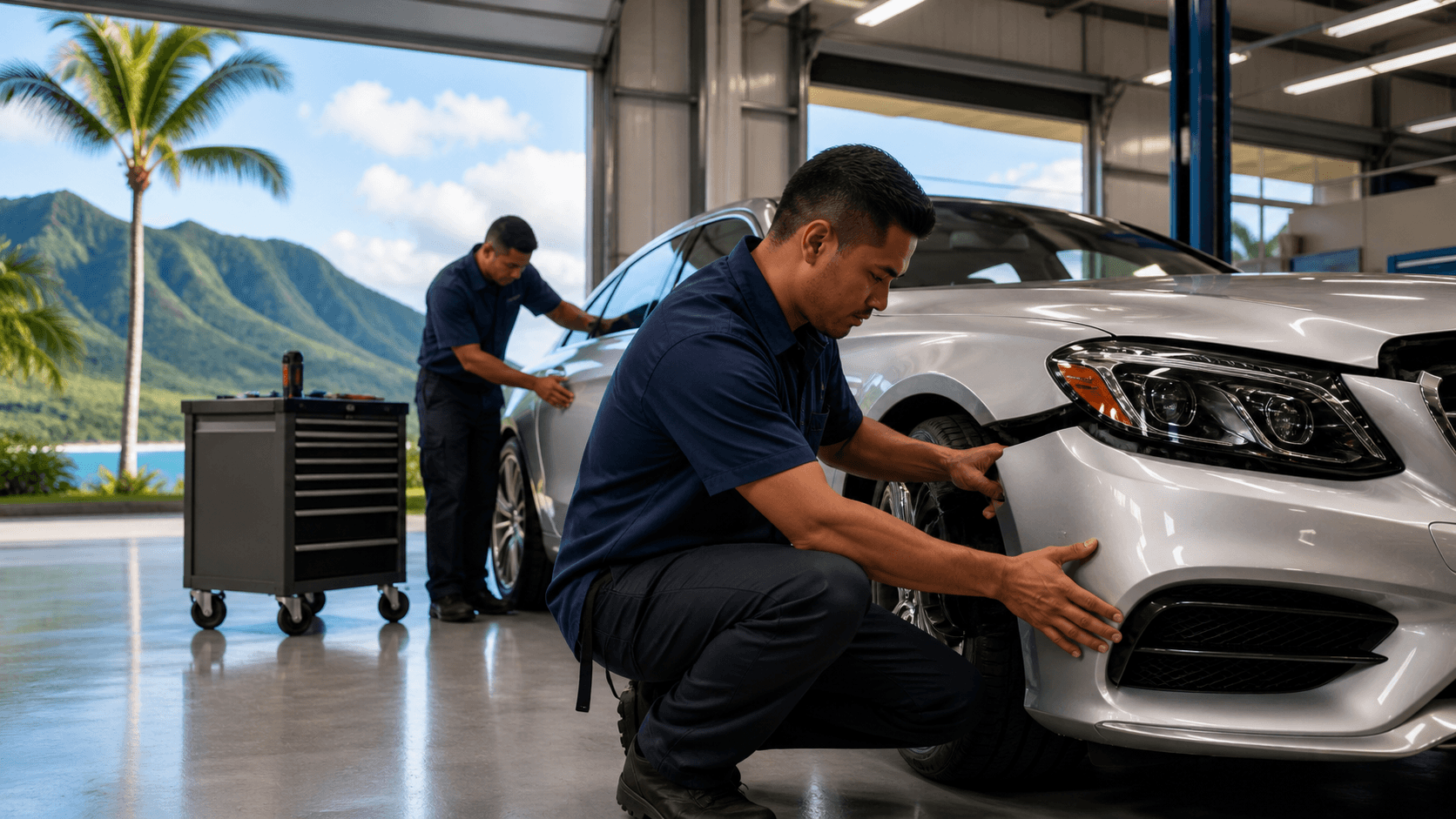
Why Low-Speed Bumps Can Create High-Risk Problems
A small tap in Pearl City traffic or a gentle bump in a crowded parking lot can feel like no big deal. The bumper is not cracked, the paint still looks good, and everyone drives away. But with newer vehicles, a low-speed impact can quietly knock important safety systems out of place.
Many cars and trucks now use ADAS, or Advanced Driver Assistance Systems. These include things like:
- Front and rear cameras
- Radar for adaptive cruise control
- Parking sensors
- Lane-keep and lane departure systems
- Automatic emergency braking
- Blind-spot monitoring
These systems help with the stop-and-go commute, tight stalls at the mall and lane changes on the freeway across Oahu. The problem is that ADAS parts sit right behind bumpers, grilles, and windshields. So even when the outside looks fine, a small shift inside can affect how your car protects you.
That is why post-bump safety checks matter, even when a collision looks minor. A professional auto body shop in Pearl City that understands both collision repair and ADAS calibration can help make sure your car is still watching the road the way the manufacturer intended.
Hidden ADAS Damage After a "Minor" Pearl City Impact
Low-speed bumps do not always leave big marks. A parking lot tap, a gentle rear-end hit at a stoplight, or a scrape in a tight garage can all happen at slow speeds. You might see only a scuff or nothing at all. But the force can travel through the bumper and brackets and shift the sensors behind them.
Common ADAS parts that live in these areas include:
- Radar sensors behind front grilles or emblems
- Ultrasonic parking sensors in front and rear bumpers
- Forward-facing cameras near the top of the windshield
- Side and surround-view cameras in mirrors or tailgates
Even small misalignments can change how these systems see distance and angle. For example:
- A radar sensor pushed a little off-center may think a car is closer or farther than it really is.
- A parking sensor that rotated slightly might miss an object or beep when nothing is there.
- A camera that moved a few millimeters can throw off lane lines or traffic sign reading.
On Oahu, these bumps are common around holiday shopping, school drop-off lines, and busy weekends. During the rainy season, slick roads mean more light taps when traffic suddenly slows. The outside of your bumper may bounce back, but the internal brackets, mounts, and sensors may not.
A quick walk-around to check for dents or scratches is helpful, but it does not tell the whole story. Modern safety systems were designed to work within very tight limits. The only way to know that they still meet the original standards is with proper diagnostics and, when needed, ADAS calibration by trained technicians.
Dashboard and Driving Clues Your ADAS Is Out of Sync
Your car often tries to tell you when something is wrong. After even a small bump, it helps to pay close attention to new warning lights or messages. Some common signs that ADAS may be out of alignment include:
- New or flashing dashboard warning icons
- ABS or traction control alerts that were not there before
- Messages like "front camera unavailable," "parking assist limited," or "collision prevention assist inoperative"
- Warning chimes that start at odd times
There are also driving behavior clues. You might notice:
- Lane-keep assist pulling gently when it should not, or not responding at all
- Adaptive cruise control following too closely or dropping out for no clear reason
- Parking sensors that beep constantly or fail to warn when you get close to another car or wall
- Automatic braking that feels late or does not trigger in situations where it used to help
Here in Pearl City, heavier showers and earlier sunsets around the holiday season make any ADAS issues more obvious. Reduced visibility means you depend more on your cameras, sensors, and alerts. If those are even slightly off, it can increase stress and risk while driving in busy traffic.
It can be tempting to ignore alerts that disappear after you restart the car. But "temporary" or self-clearing warnings can still mean a sensor is right on the edge of its safe range. The system might pass a basic self-check but still sit out of proper calibration. That is why a professional scan after a bump is so important.
When a "Quick Look" Is Not Enough: Why Calibration Matters
There is a big difference between simply looking at a car, fixing the visible damage, and making sure the electronic safety systems are reset and aligned correctly. Visual inspection and mechanical repair are only part of the process with modern vehicles.
Here is how those pieces fit together:
- Visual inspection: Checking for obvious cracks, bends, gaps, and paint damage.
- Mechanical repair: Straightening or replacing parts like bumpers, brackets, grilles, or suspension pieces.
- Electronic calibration: Using special tools, targets, and procedures to tell cameras and sensors exactly where "straight ahead" and "correct distance" really are.
Any of these situations can call for professional ADAS calibration:
- Bumper or grille repair or replacement
- Windshield replacement or camera removal
- Suspension or steering repairs
- Alignment changes after a curb strike or fender impact
A manufacturer-focused shop in Pearl City uses level floors, aiming targets, scan tools, and test drives to perform both static and dynamic calibrations that follow each brand's guidelines. Vehicles from brands like Mercedes-Benz, Ford, Lincoln, and Porsche have specific steps that must be followed so the systems respond as designed.
Skipping calibration after a repair can create real safety risks. Stopping distances can increase when automatic braking does not "see" a hazard correctly. Timing between sensors and airbags may not support the design of the safety system in another collision. The car might look perfect on the outside but fail to meet the original safety performance the engineers intended.
Choosing a Pearl City Shop That Understands ADAS Safety
Not every repair shop is set up to handle modern ADAS work. When you look for an auto body shop in Pearl City after a bump, it helps to ask a few simple questions.
- OEM certifications or training for your vehicle brand
- Up-to-date scan tools and calibration equipment
- Technicians who are experienced with ADAS and structural repair
- A clean, organized shop with space set aside for calibration procedures
It also matters that the shop follows manufacturer repair methods and uses OEM-approved parts when required. ADAS systems are built to work with specific bumper covers, brackets, and glass types. Using the right parts helps protect vehicle warranties and keeps the systems working the way they were designed.
At Classic Bodyworks Hawaii, we focus on bringing structural, cosmetic, and ADAS-related work together in one place. When a vehicle comes in after a low-speed impact, we look at how all three areas connect. That way, body repairs and calibrations can be planned together so your car leaves with its safety systems checked, repaired when necessary, and ready for the roads across Oahu.
We also understand that insurance claims can feel confusing after a "small" bump. Hidden ADAS damage may not be obvious at first. Proper documentation, diagnostic scans, and repair plans help explain to insurers why certain steps, like calibration, are needed to return your vehicle to safe driving condition.
Restore Your Vehicle's Value With Expert Collision Repair
If your car has been in an accident, our team at Classic Bodyworks Hawaii is ready to bring it back to pre-loss condition. As a trusted auto body shop in Pearl City, we handle everything from minor dents to major collision damage with attention to detail and quality materials. Reach out today through our contact page to schedule an estimate and get your repair process started.