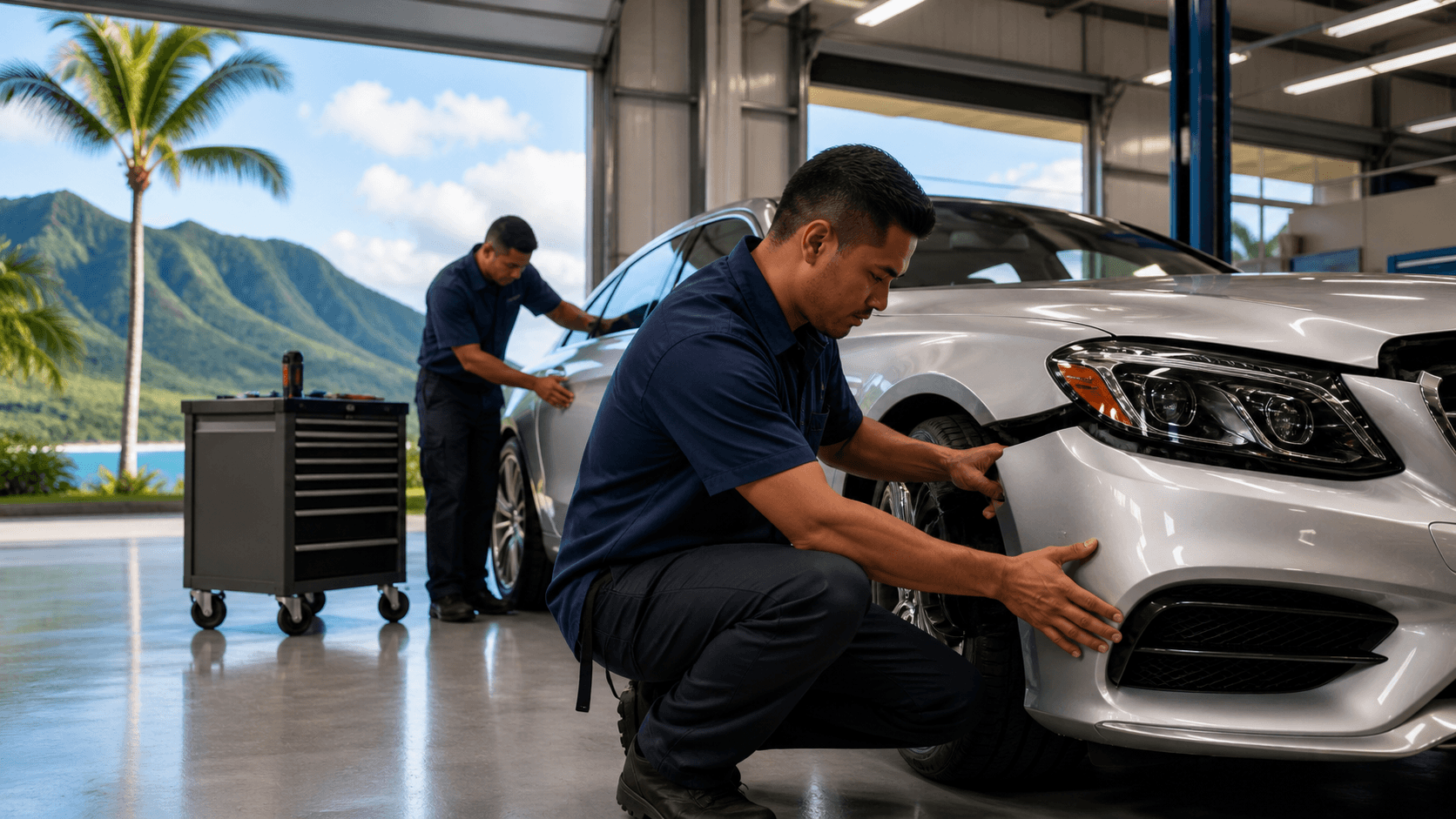
Keep Your Ford Safe, Valuable, and Road Ready
After a collision, choosing the right repair path for your Ford matters. A dented bumper or scraped door may be easy to spot, but the damage behind the panel can affect safety systems, handling, appearance, and the vehicle's future value.
At Classic Bodyworks Hawaii, we serve Pearl City and drivers across Oahu with auto body, frame, mechanical, paint, and certified vehicle repair services. We know modern collision repair is about more than making a vehicle look good again. Before you approve repairs, it helps to understand the difference between a Ford-focused certified process and standard collision work.
Ford Certified Repair in Pearl City Preserves Factory Standards
A Ford-certified repair in Pearl City generally means the work is completed at a facility that follows applicable Ford repair procedures, training requirements, equipment standards, and documentation practices. Because certification status can change, we recommend confirming a shop's current credentials and asking how its repair process applies to your specific Ford model.
Manufacturer repair information can guide many decisions after a collision. What looks like a simple panel repair may involve rules for replacement, structural measurements, weld locations, bonding materials, corrosion protection, or the type of parts used. Those details matter because today's Ford vehicles can be built with a mix of materials and systems that need a careful approach.
A factory-centered repair plan is designed to address the vehicle as a whole, not just its visible appearance. That includes helping restore intended fit, finish, drivability, and safety-related performance.
Questions worth asking before work begins include:
- Will the repair plan follow applicable Ford procedures?
- Will the shop inspect structural and mechanical damage?
- How will parts recommendations be explained?
- Will the repair steps be documented?
We believe clear answers help you feel more confident about the decisions being made for your vehicle.
Why Standard Collision Work May Miss Ford Requirements
Standard collision shops can perform good work, and many have experienced technicians. Still, not every facility has the same manufacturer-specific training, equipment, repair information access, or Ford-focused process. The difference may not be obvious when you first look at a repaired panel, but it can matter beneath the paint.
Repair methods can vary based on the vehicle's design and the location of the impact. High-strength steel, aluminum panels, unibody structures, and frame components may require specific inspection and repair methods. A shop also needs to consider panel alignment, paint blending, sensor location, and whether electronic systems need further attention.
For example, a bumper can look straight while a sensor bracket, mounting point, or nearby component still needs inspection. Likewise, a door or fender may appear properly installed but have uneven gaps or alignment concerns that affect the final result.
Before authorizing repairs, we suggest asking practical questions such as:
- Will pre-repair and post-repair diagnostic scans be performed when needed?
- Does the repair plan include structural measuring when the impact calls for it?
- Will the shop explain whether repair or replacement is recommended?
- Are calibration needs being considered for cameras, radar, or other sensors?
- How will final fit, finish, and vehicle operation be checked?
A thorough conversation at the start can prevent confusion later and help you understand what your Ford needs.
Tools, Parts, and Calibrations Support Proper Repairs
Modern Ford vehicles may include advanced driver assistance systems that depend on precise placement and proper operation. Cameras, radar, parking sensors, lane-support features, and collision-warning technology can be affected by an impact, even when the damage seems minor.
That is why a professional assessment may include diagnostic equipment, structural measuring systems, manufacturer repair information, and trained technicians who understand how collision damage can affect more than sheet metal. Depending on the vehicle and impact area, a repair plan may need to account for scans, sensor inspections, calibration procedures, and mechanical checks.
Parts choices also deserve attention. We help customers understand recommendations based on the vehicle's needs and the planned repair. Proper corrosion protection, panel preparation, paint matching, and quality checks all play a role in a finished repair that looks right and performs as intended.
A complete review should consider:
- Structural condition and panel alignment
- Mechanical components near the impact area
- Safety-system warnings or sensor damage
- Paint color match and blend areas
- Final inspection of fit, operation, and finish
November Driving Makes Repair Choices More Important
November brings holiday plans, heavier traffic, and packed calendars across Oahu. Rainy conditions can also make daily driving more demanding, especially when you are heading to family gatherings, school events, or seasonal errands. If your Ford has been involved in a collision, delaying an inspection simply because it still drives can leave concerns unnoticed.
A Ford-certified repair in Pearl City can be worth considering when you want a process that accounts for the vehicle's construction and technology. We recommend having collision damage assessed promptly so a trained professional can identify visible and hidden concerns before they become harder to manage.
Pay attention to changes such as:
- A steering wheel that pulls or feels off-center
- Warning lights on the dashboard
- Uneven panel gaps or doors that do not close smoothly
- New noises, vibrations, water leaks, or unusual tire wear
- Changes in braking, handling, or sensor operation
Humidity, rain, and regular road use can place extra stress on damaged areas. A timely inspection gives you a clearer picture of what needs attention before your vehicle is relied on for holiday travel.
Choose a Repair Plan That Looks Beyond the Surface
Following a collision, the right repair plan should address visible body damage along with structural integrity, mechanical condition, paint quality, and safety-system performance. At Classic Bodyworks Hawaii, we encourage you to ask about vehicle-specific procedures, expected repair steps, insurance coordination, estimated timing, and current certification credentials before approving work.
The practical takeaway is simple: do not judge collision damage by appearance alone. Before holiday travel and rainy-season driving add more miles to your Ford, a professional assessment can help identify concerns that deserve proper repair.
Restore Confidence In Your Ford Repair
At Classic Bodyworks Hawaii, we provide precise repairs that support your Ford's safety systems, fit, and finish. Learn more about Ford-certified repair in Pearl City and how our team can help restore your vehicle with care. When you are ready to discuss your repair needs, contact us to schedule an appointment.